
Stacking shipping containers might look simple, but there’s real engineering behind it. Each unit is designed to withstand massive weight through specific structural points. In this guide, you’ll learn how these design details work together to keep every stacked container safe, stable, and ready for whatever load you put on top.

Key Considerations Before Stacking
Before lifting any container, take time to assess both the site and the units themselves. A solid foundation and sound containers are essential for safe, long-lasting stacks

1. Site and Ground Stability
All the container’s weight is concentrated on the corner posts of the bottom unit, so the ground must be level and strong enough to handle the load. A compacted gravel base or reinforced concrete pad helps prevent shifting and ensures even weight distribution.
2. Container Condition
Only use structurally sound and stable containers. Inspect for rust, dents, or weakened corner posts and castings. Always check the CSC (Container Safety Convention) plate for the maximum stacking weight and never exceed it. Even for containers repurposed as offices or storage units, adhering to these limits is vital for safety and stability.
3. Load-Bearing and Alignment
Containers should always be stacked corner-to-corner so that weight transfers evenly from top to bottom. Place heavier units at the bottom and lighter ones on top. Properly distribute the cargo inside each container to prevent shifting that could destabilize the stack, whether on-site storage or a modular office setup.

4. Regulations and Personnel
Follow OSHA or local stacking rules regarding maximum height and approved securing systems, such as twist locks or stacking cones. Only trained and certified operators should handle cranes or forklifts to maintain safety and compliance.
Step-by-Step Container Stacking
Proper container stacking begins the moment a shipment arrives at your site. Each step ensures safety, operational efficiency, and long-term stability while protecting both cargo and equipment.
Step 1: Examine Container Integrity
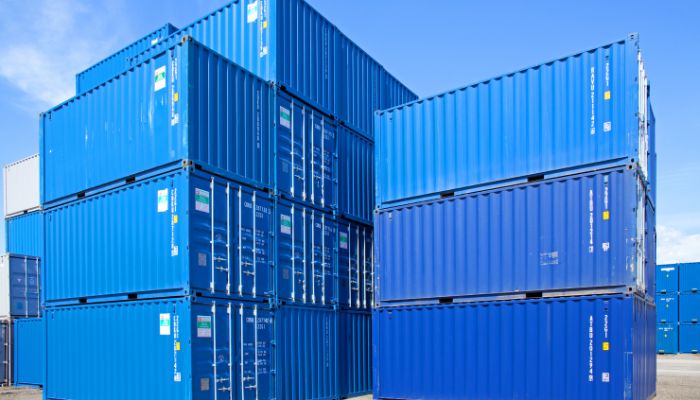
Before any lifting, confirm that each container is structurally sound. Focus on the corner posts and castings, as these carry all vertical loads. Look for cracks, heavy corrosion, or deformities that could compromise strength. Review the CSC (Container Safety Convention) plate to check the allowable stacking weight, ensuring that the combined load of stacked containers stays within safe limits. Identify the heaviest container to place at the bottom, reducing the stack’s center of gravity.
Step 2: Select Lifting Equipment Strategically
Choosing the proper lifting tools depends on container size, weight, and stacking height. Cranes offer precision for high or heavily loaded stacks, while reach stackers provide speed and flexibility in busy yards. Heavy-duty forklifts are suitable for smaller stacks on level terrain. Always ensure operators are trained and certified, and that machinery meets load capacity requirements.
Step 3: Place Containers with Precision
Accurate placement prevents instability. Position the first container on a pre-prepared, flat surface, ensuring full support for all corner posts. Before adding the next unit, install appropriate securing devices such as twist locks or stacking cones. Carefully lift and guide the upper container, aligning its corners exactly with the lower unit’s castings. Proper positioning ensures vertical load is evenly transmitted, minimizing the risk of tilting or uneven stress.

Step 4: Secure Stacks Effectively
Once aligned, locking mechanisms are essential for safety. Twist locks create a solid mechanical connection, firmly holding stacked containers together. Stacking cones provides alignment support and prevents lateral movement, particularly in temporary stacks or lighter loads. Properly securing each container safeguards the stack from wind, operational vibrations, and accidental displacement.
How Containers Lock Together
Stacked shipping containers rely on specialized mechanisms to stay stable, resist sliding, and withstand environmental forces. Understanding these components is essential for safe stacking.
1. Corner Castings
Corner castings are steel blocks at each corner of a container. They carry the weight from upper containers and provide standardized openings for securing devices such as twist locks or stacking cones. Proper placement ensures safe weight transfer through the stack.
2. Twist Locks
Twist locks are mechanical devices that firmly secure containers together. The conical head fits through the upper container’s bottom, casting into the lower container’s top. Rotating the lock 90 degrees engages it, preventing vertical separation and horizontal movement. Twist locks are ideal for permanent or multi-level stacks.

3. Stacking Cones
Stacking cones helps maintain alignment and prevent minor horizontal movement. They fit into corner castings of stacked containers. Standard cones rely on weight for stability, while locking cones offer additional latching. They are typically used for temporary or low-risk stacks.
4. Securing and Releasing
Place the twist locks or stacking cones in the top castings of the bottom container, then lower the upper container carefully to align the corners. Rotate the twist locks 90 degrees to engage, or allow the stacking cones to hold the container by weight. To release, twist locks are rotated back 90 degrees before lifting.
Stack Height and Stability
Maintaining a safe and stable stack is essential for operational efficiency and personnel safety. Understanding limits, proper weight placement, environmental factors, and reinforcement methods helps prevent accidents, structural failure, and cargo damage.
Safe Height
Determining the safe height for container stacks is important to prevent tipping or structural failure. Limits depend on container condition, foundation quality, and environmental factors. Standard ISO containers can hold multiple fully loaded units, but on solid ground, two to three containers are generally safe. Taller stacks require engineering assessments and reinforced foundations.

Weight Management
Heavier containers should be at the bottom to lower the center of gravity. Unevenly loaded or shifting cargo increases the risk of tipping; therefore, contents should be evenly distributed and secured.
Environment and Foundation
Wind and other external forces can create lateral pressure, especially on empty containers. The foundation must be level and firm, as uneven or soft ground increases stress on the bottom container. Only undamaged containers should be used at the base.
Reinforcement
For taller or exposed stacks, lashing rods, turnbuckles, or bridge fittings improve stability. Clamping containers side by side creates a wider footprint, ideal for land storage or modular building setups.
Forklifts and Operator Certification
Operating forklifts for container stacking requires strict adherence to safety protocols, the selection of appropriate equipment, and certified operator competence. Proper practices prevent accidents, protect cargo, and maintain stack stability.

1. Optimal Use Cases
Forklifts are best suited for handling low-rise stacks on prepared, level surfaces. They are efficient for temporary storage areas, construction sites, or locations where larger cranes or reach stackers cannot maneuver. Using forklifts in these scenarios ensures efficiency without compromising safety.
2. Equipment Standards
Not all forklifts are suitable for container handling. Heavy-duty, industrial-grade forklifts with sufficient lifting capacity are essential. Fork lengths or specialized attachments must match container dimensions to maintain stability. Operations must always occur on firm, level ground to reduce tipping hazards and ensure precise placement of containers.
3. OSHA-Compliant Training
Employers are required to provide comprehensive training that is aligned with OSHA Standard 29 CFR 1910.178. Training should combine formal lessons such as videos, written instructions, and lectures with hands-on practical exercises. Operators must understand safe handling, load dynamics, and site-specific challenges to prevent accidents and ensure a safe work environment.

4. Certification Requirements
Certification confirms that the operator can safely manage container stacks in their specific workplace. The employer issues certification after evaluating competency. Documentation must include the operator’s name, training dates, evaluation dates, and the instructor’s information, ensuring accountability and traceability.
5. Refresher Training and Age Regulations
Operators must undergo re-evaluation at least every three years. Additional refresher courses are required if unsafe practices are observed, an accident occurs, or a new type of forklift is assigned. All operators must be at least 18 years old, ensuring compliance with legal and safety requirements.
Benefits of Stacking Containers
Stacking shipping containers delivers practical, economic, and operational advantages, whether for storage, logistics, or modular construction. Proper stacking maximizes space, enhances security, and reduces costs while allowing for flexibility and future expansion.
Efficient Use of Space
Stacking allows multiple containers to occupy the footprint of a single unit, making it ideal for sites with limited land. Vertical storage increases capacity without requiring additional space, allowing businesses to organize operations efficiently. This is especially useful in ports, urban construction sites, and high-density storage facilities.

Strength and Weather Resistance
Containers are made from durable Corten steel, providing superior resistance to environmental hazards. Properly stacked and secured, they create a robust, weather-tight structure that protects cargo or occupants from rain, wind, and corrosion. Their solid steel walls also act as a deterrent against theft, making stacked containers highly secure.
Cost-Effective and Flexible Solution
Stacked containers reduce reliance on traditional construction, saving on materials, labor, and time. The modular nature allows for scalable solutions: units can be added or removed as storage demands change. Furthermore, the mobility of containers means the entire stack can be relocated if needed, preserving the value of the investment.
Applications of Stacked Containers
The strength, modularity, and versatility of shipping containers make them suitable for a wide range of industries and purposes. Stacking containers unlocks practical solutions for construction, logistics, storage, and temporary facilities.
1. Construction and Modular Housing
Stacked containers are increasingly used in building projects that demand speed and flexibility. Multi-story housing units, dormitories, or affordable residential buildings can be created by modifying stacked containers with doors, windows, and interior finishes. On construction sites, stacked containers serve as break rooms and changing facilities, optimizing limited space while providing durable, secure structures.

2. Shipping and Logistics Terminals
Container stacking is essential for efficient cargo handling and storage. At ports and intermodal hubs, containers are organized in precise vertical arrangements to streamline loading and unloading operations. In storage yards, stacking increases density and accessibility, allowing cranes, reach stackers, and forklifts to efficiently handle large volumes of containers while reducing the area required for operations.
3. Industrial Storage
Businesses leverage stacked containers to create safe, weather-resistant storage solutions. Multi-tiered container arrangements provide secure storage for inventory, raw materials, and machinery while freeing ground space for operational activities. Specialized containers can also be stacked to segregate certain non-flammable hazardous materials, offering controlled and protected storage zones.
4. Temporary Offices
The portability and rapid deployment of containers make them ideal for temporary structures. Stacked units can be used to form field offices, shelters, or supply distribution points during emergencies or disaster relief efforts. For commercial events or pop-up businesses, containers are stacked to create multi-level shops, cafes, or ticket booths, maximizing visibility, foot traffic, and functional space in a compact footprint.

Conclusion:
Stacking shipping containers safely requires precision, proper equipment, and adherence to regulations. Always start with a level, stable foundation. Place heavier containers at the bottom, and never exceed the CSC plate’s allowable stacking weight. Secure each stack with twist locks or suitable devices to prevent shifting.
Safe stacking is ongoing, with regular inspections of containers and securing mechanisms, and ensures that all lifting personnel are trained and certified. Following these practices ensures container stacking is efficient, durable, and scalable for storage, logistics, and modular construction.


