
Are you looking for a safe and reliable solution for wastewater storage? Are you concerned about overflowing of wastewater, unpleasant odors, or environmental risks caused by improper wastewater management?
In this guide, you’ll learn everything you need to know about holding tanks, helping you treat wastewater safely and efficiently.
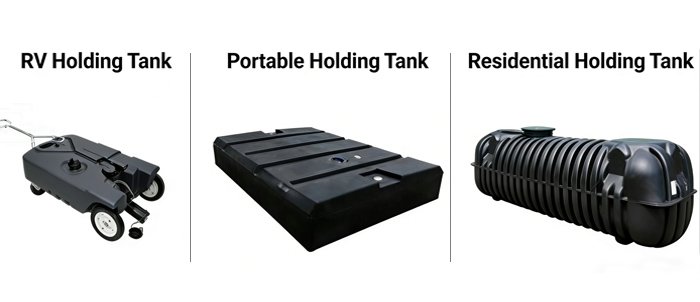
What is a Holding Tank?
A holding tank is a movable container used to store wastewater. Then it can be pumped out and disposed of properly.
You’ll often see holding tanks used in:
- RVs
- mobile offices
- temporary housing
- remote properties
Most holding tanks are made of polyethylene or fiberglass. These materials are strong, corrosion-resistant, and designed to handle harsh outdoor environments.
Structurally, a holding tank typically includes:
- An inlet pipe
- A sealed storage chamber
- An access lid for inspection
- A pump-out port
Types of Holding Tanks
Holding tanks are divided into three types:
- RV Holding Tanks
- Residential Holding Tanks
- Portable Holding Tanks
You can choose one according to your needs.
RV Holding Tank
If you own an RV, your vehicle likely includes three separate tanks that manage water usage.

These tanks include:
- Freshwater Tank
- Gray Water Tank
- Black Water Tank
Each one plays a different role in your RV’s plumbing system.
1. Freshwater Tank
It is used to store clean water. Its capacity far exceeds the other two types of holding tanks. It’s about equal to the capacity of the black and gray water tanks, and even more. If your RV is one of the following types in Table 1, you can refer to their freshwater tank capacity:
Table 1:
Freshwater Tank Capacity in Different Types of RVs
| Type | Capacity of Freshwater tank(gal) |
| Small Pop-up Trailer / Class B RV | 10 to 20 |
| Travel Trailers | 30 to 40 |
| Large Class A RV | 100+ |
Important Tip: Watch Your Water Pressure
When you connect your RV to a municipal water supply, pressure matters.
- Older RV systems usually handle up to 50 PSI
- Newer RVs typically handle up to 60 PSI
Because the minimum flow pressure of most municipal water supply interfaces will be less than 75 pounds per square inch. So you can install a water pressure regulator to protect the plumbing system.
2. Gray Water Tank
Your gray water tank collects wastewater from:
- sinks
- showers
- bathroom drains
This water contains soap, food particles, and dirt, but no toilet waste. It can be reused, but it is not recommended to do so. Most RVs include one or two gray water tanks, depending on the size of the vehicle.
Your RV type determines the capacity of your gray water tank. You can refer to Table 2 below:
Table 2:
Gray Water Tank Capacity in Different Types of RVs
| RV Type | Gray Water Tank Capacity (gal) |
| Standard RV Models | 30–40 |
| A-class RV | 70+ |
| B-class and C-class RV | Smaller tanks |
In many RV designs, the gray tank and black tank have similar capacities, though some gray tanks are slightly larger due to higher water usage. You need to choose the tank based on your domestic water situation and the type of RV.
3. Black Water Tank
Your black water tank stores wastewater from the RV toilet. Its maximum capacity depends on how much water you or your family use. Typical black tank capacities range from 4 to 150 gallons. If you have any questions about capacity selection, you can contact us, and we will provide you with the best solution.
Residential Holding Tank
If your property does not have access to a municipal sewer system or cannot support a septic system, a residential holding tank may be your best option.
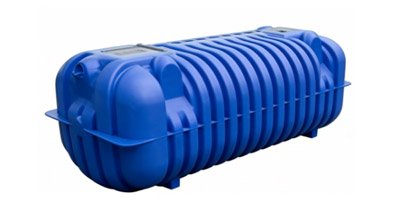
These tanks collect all wastewater from your home, including water from:
- kitchens
- bathrooms
- laundry rooms
The holding tank capacity should be at least seven times your daily wastewater volume. In some cases, such as in Washington, Environmental Health Officers may require some law about the holding tank capacity to exceed the standards listed in the following Table 3:
Table 3:
Minimum Holding Tank Capacities Based on the Expected Daily Sewage Flow Rate
| Number of Bedrooms | Daily Wastewater | Recommended Tank Size |
| 1 | 185 gal | 1295 gal |
| 2 | 265 gal | 1850 gal |
| 3 | 340 gal | 2400 gal |
| 4 | 420 gal | 2960 gal |
| 5 | 500 gal | 3520 gal |
| 6 | 580 gal | 4070 gal |
Local regulations may require larger tanks, so always check with your local environmental health department.
Portable Holding Tank
Portable holding tanks are commonly used when mobility and convenience are important.

You’ll often see them used for:
- RV camping trips
- outdoor events
- construction sites
- temporary sanitation systems
Your choice depends on:
- Mobile needs
- The complexity of the setup
- The usage environment.
Here are several portable holding tanks:
Table 4:
Types of Portable Holding Tanks
| Type | Mobility | Efficiency | Complexity | Best Use Case |
| Carts with Portable Waste Holding Tanks | outstanding | Good | Low | RVs, campers, and frequent dumping |
| Gravity-Fed Portable Holding Tanks | Good | Acceptable | Very Low | Occasional use, simple setups |
| Pressure-Assisted Portable Holding Tanks | Acceptable | outstanding | High | Extended trips, full-time RVing |
| Vacuum Portable Waste Holding Tanks | Variable | outstanding | Very High | Emergency, medical, institutional use |
How Does a Holding Tank Work?
RV Holding Tank
Freshwater tank
There is a small car-mounted pump hidden near electrical equipment, such as washbasins, stoves, water heaters, or fridges in the RV. It can pull water from the holding tank and circulate it through the RV’s piping system to supply water to faucets, showers, and even toilets.
Gray water tank and black water tank
The wastewater you generate in the car will flow into the holding tank through the inlet. If you need to clean them, go outside, open the gate valve of the corresponding holding tank, and connect the outlet to the drain pouring hole on the RV parking lot.
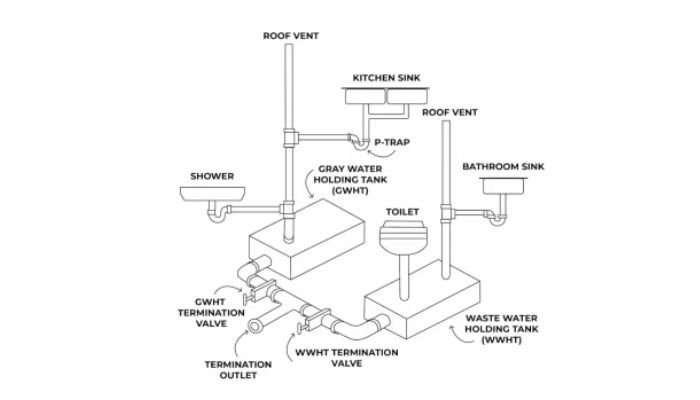 RV Holding Tank works
Residential Holding Tank
For homes using a holding tank system, the process is simple.
- All wastewater generated at home flows into the holding tank through the water inlet.
- The tank stores all wastewater.
- The collected wastewater needs to be pumped from the water outlet by contacting a professional service company to reduce environmental pollution and health risks.
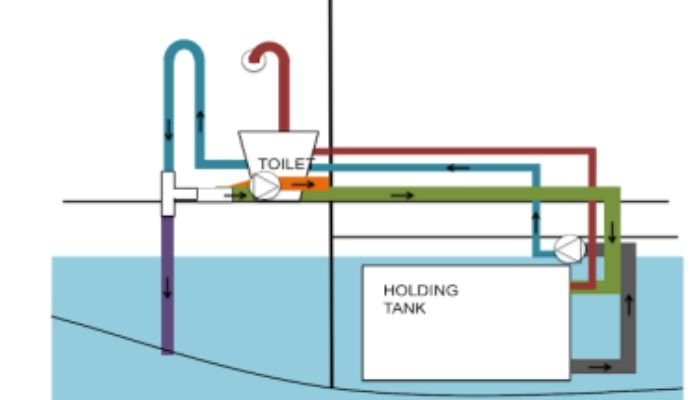 Residential Holding Tank Works
Application of Holding Tank
Because of their flexibility, holding tanks are used in many environments, including:
- maritime vessels
- remote properties
- second homes
- seasonal cabins
- construction job site
- used a mobile office or camper
- other facility utilizing a toilet, sink, or water-reliant appliance
Anywhere wastewater needs temporary storage, a holding tank can provide a practical solution.
Advantages of Holding Tank
- Warn timely
- Use widely
- Long service life
- Flexible Use
- Easy installation
- Environmental protection
- Good adaptability
- Compliant with regulations
Disadvantages of Holding Tank
Despite their benefits, holding tanks also have some limitations.
- High maintenance costs
- Limited capacity
- Without the treatment function
- Potential overflow
- Frequent pumping required
Clarification of Misunderstandings About Holding Tanks
Misconception 1: The holding tank is difficult to maintain. In fact, regular pumping maintenance can ensure its normal operation.
Misconception 2: All holding tanks are the same. Actually, different types and materials of holding tanks have significant differences in performance and applicable conditions.
Misconception 3: Holding tanks are harmful to the environment. As long as they are properly maintained, they can prevent untreated wastewater from polluting water sources.
Conclusion
Holding tanks have wide applications in both daily life and commercial fields. They can solve the problem of wastewater storage and provide a clean environment for you. If you want to learn more about holding tanks, please contact us, and we will provide you with more detailed answers and high-quality products.
FAQ
1. How to choose a holding tank?
When you choose a holding tank, the size and capacity should be determined based on the size of the installation site and the number of users. It requires you to communicate with professionals. If you are hesitating about what type of holding tank to choose, you can contact us. And we will provide you with suitable holding tank selection solutions.
2. How to install a holding tank?
The method of installing a holding tank depends on the type, purpose, and local requirements for installing the tank. You need to contact a professional person for installation to ensure proper and safe completion.
3. Is installing a holding tank cheaper than a septic system?
Yes. Because of the design of the holding tank, the installation cost of the holding tank is cheaper than the installation cost of the septic tank. Other costs depend on local government regulations and soil conditions.
4. What is the difference between a holding tank and a septic tank?
Holding Tank
- stores wastewater only
- requires frequent pump-outs
- no wastewater treatment
Septic Tank
- treats wastewater using bacteria
- separates solids and liquids
- requires a drain field
If your property cannot support a septic system, a holding tank may be the best alternative.
5. How often should a holding tank be pumped?
Most residential holding tanks require pumping every 2–4 weeks. However, this depends on:
- household size
- daily water usage
- tank capacity
For example, based on a daily water consumption of 150 gallons per bedroom, a family of four using a 3000 gallons holding tank would be pumped approximately every 17 days.

